damián valdés dilla
“there are other worlds…”
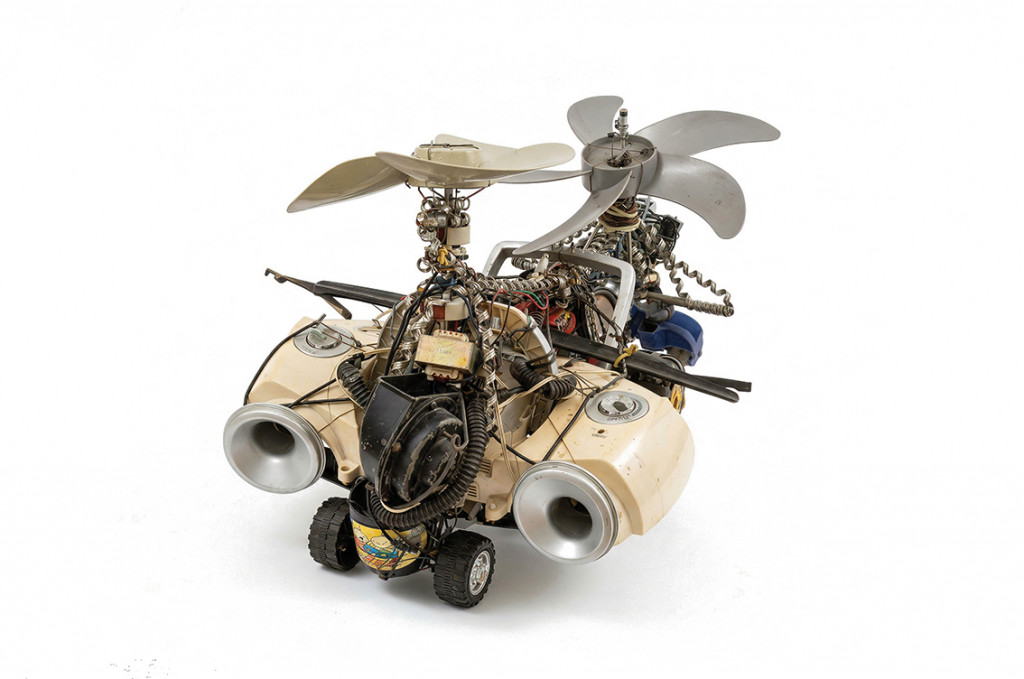
Damián Valdés Dilla builds cities as one rebuilds oneself, when he is not creating fantastical machines as metaphorical means of escape. It is his neighborhood of Alamar, in Havana—a deprived landscape of Soviet-style buildings rising by the sea—that seems to have become the perfect matrix for nurturing dreams of elsewhere.
It all begins at the age of seventeen, when his bouts of paranoid schizophrenia force him out of school, while his growing social isolation gradually fuels his need for escape. Discarded materials, remnants of a collapsed and stagnant world, become the building blocks for his towers and other vehicles. The former, dense and vertical, saturate space as if to ward off emptiness. The latter seem intent on abolishing distance and reviving the dream of Icarus. All express an unwavering faith in humanity’s ability to free itself from alienation and to escape confinement—if only through dreams.
These constructions take the form of a kind of heterotopia—autonomous spaces governed by their own rules—where reality is displaced rather than fled. Escape here is not a departure from the world, but an inner reconfiguration. One can sense echoes of the Facteur Cheval and Bodys Isek Kingelez in Valdés Dilla’s work, even of Piranesi. All the more so when one recalls that this visionary eighteenth-century architect created his famous candelabra using fragments and debris from the excavations of Hadrian’s Villa.
The shift to drawing marks a turning point. Where his assemblages held together through triumphant entanglement, his urban views impose vertiginous perspectives and a rigorous organization, the line attempting to stabilize what matter once overflowed. Even when the artist deliberately disrupts this order by inserting scenes of chaos and destruction, his metropolises remain traversed by incessant flows and strikingly devoid of human presence—as if humanity had withdrawn in favor of an autonomous system, unless Valdés Dilla intended them as spaces of projection.
Far from being marginal, such work engages art history at its most sensitive point: where creating no longer means producing for others, but making the world—be it inner or outer—simply inhabitable. As Paul Éluard wrote, “there are other worlds, but they are in this one.”
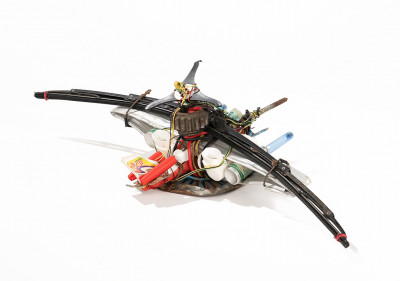
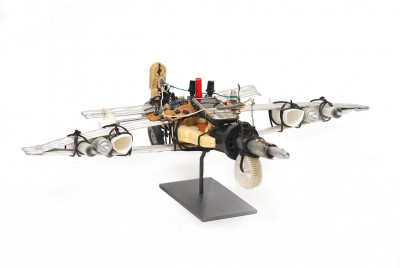
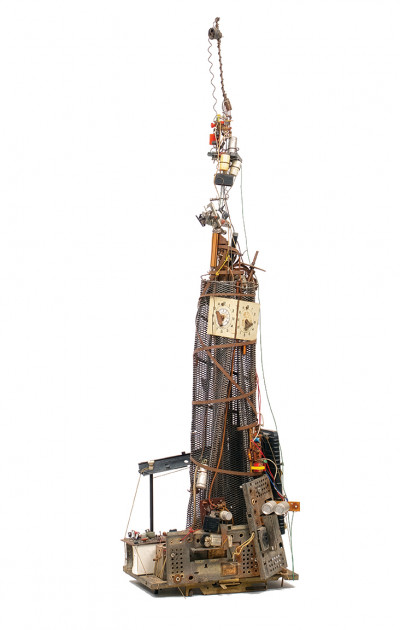
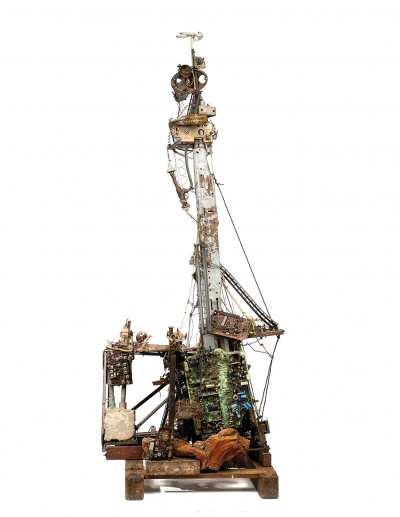
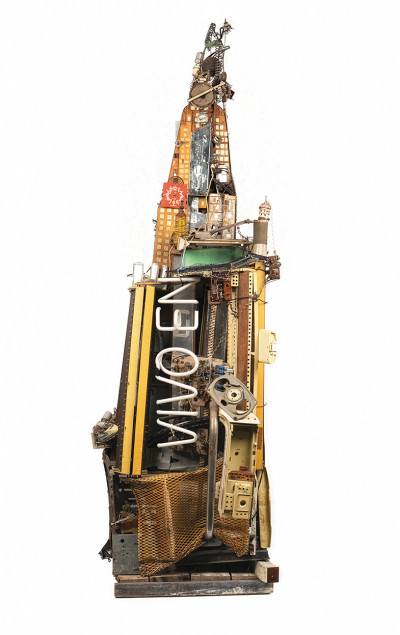
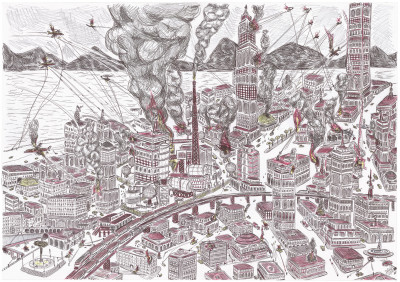
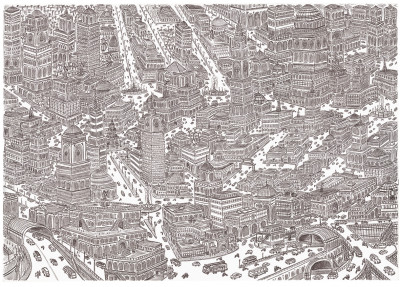
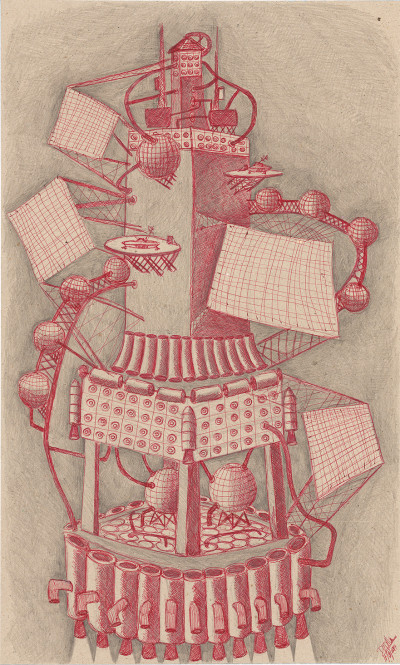
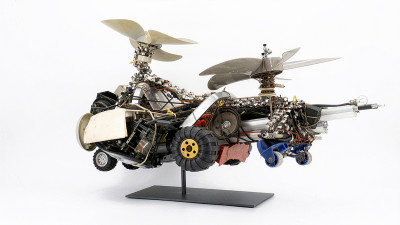
In the work of Damián Valdés Dilla (1970–), the city becomes a mental space, fragmented and recomposed. Using modest materials or drawing, he develops dense architectures, traversed by machines and means of transport. Rooted in the context of Cuban Art Brut, his work emerges from a constrained relationship to space and everyday life. Exhibited internationally since the 2010s, his work is now held in several public and private collections, including that of the Musée national d’Art moderne – Centre Pompidou.
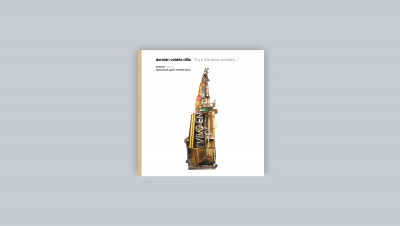
catalogue publié à l’occasion de l’exposition
damián valdés dilla : “il y a d’autres mondes…”
du 30 mars au 13 juin 2026
texte : ingrid luquet-gad
pour acheter le catalogue : cliquez ici