aka Rigo
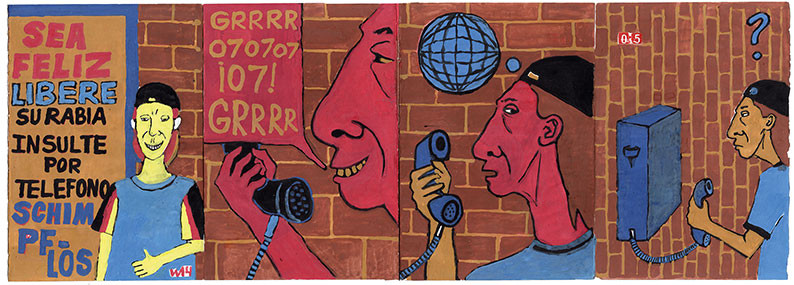
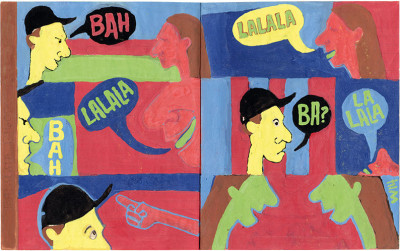
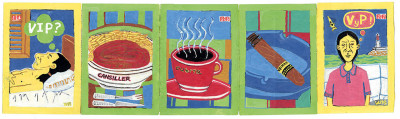
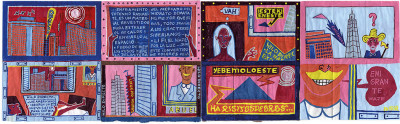
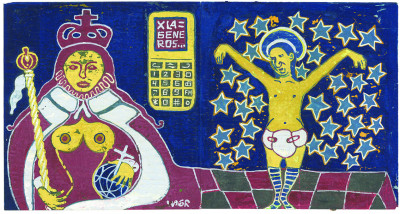
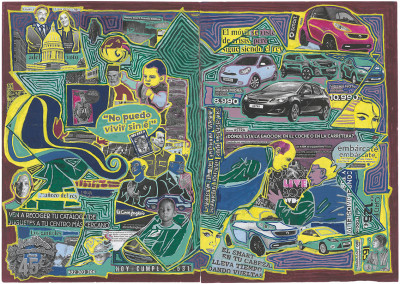
Guillermo Rigoberto Casola Marcos, born in Havana in 1961, is better known under the name Rigo. His parents and siblings, like him, suffer from mental disorders; one of his brothers has been diagnosed with paranoid schizophrenia. But Rigo has been drawing since childhood, and when he does not give his drawings away, he throws them out. His gouaches attempt to express his daily life, the feelings of a poor Cuban—half artist, half madman—yet not without a sense of humor. Halfway between pop painting and illustration, these little scenes unfold narratively like a storyboard. His very confident graphic language owes much to his talent as a colorist.
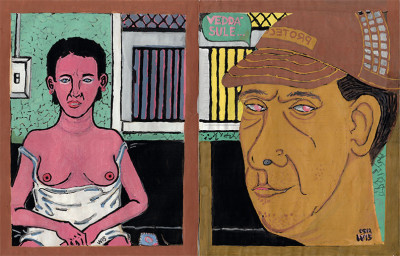
His compositions were structured in panels, in the manner of comic strips. The colors—bold and contrasting, dominated by saturated reds, blues, and yellows—gave his figures an immediate, frontal presence. Characters, words, and symbols coexisted within a fragmented universe where intimate memories, scenes of daily life, and references to psychiatric institutions intertwined. The texts integrated into the image, often awkward or phonetic, conveyed a direct, unfiltered speech that fully contributed to the visual narrative. This shattered world, at times infused with a cosmic or dreamlike imagination, echoed the artist’s life and his subjective perception of reality.
Moreover, Rigo enjoyed watching experimental films and even went so far as to make his own videos, which he kept until he found a computer on which to show them. In his very short films, he often lingered on details of his drawings, imbuing them with a poetic strangeness that the Surrealists would not have disowned.
Committed twice to psychiatric hospitals, Rigoberto worked as a guard in a state service until the tragic accident that cost him his life in 2025.