Philipp Schopke
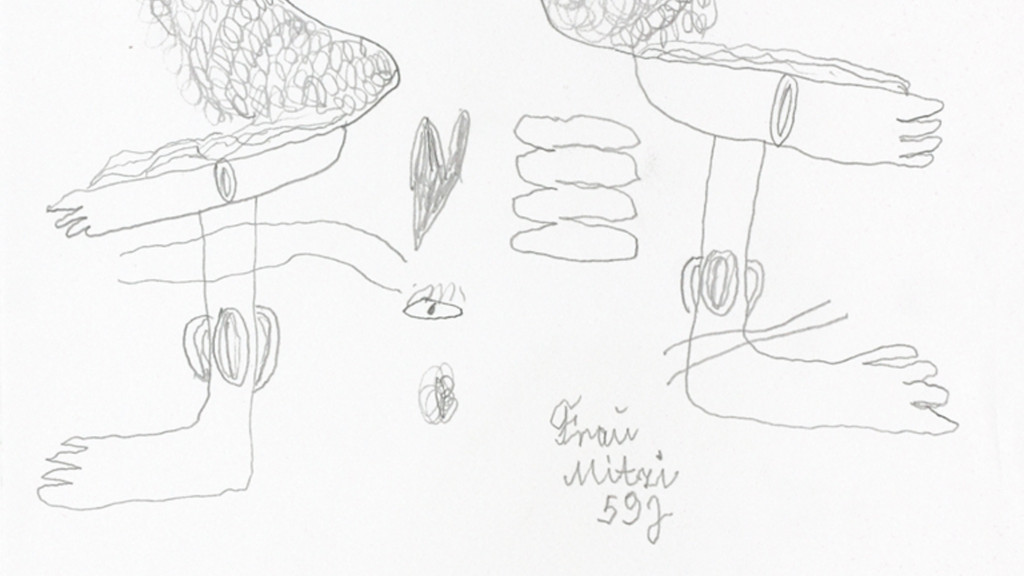
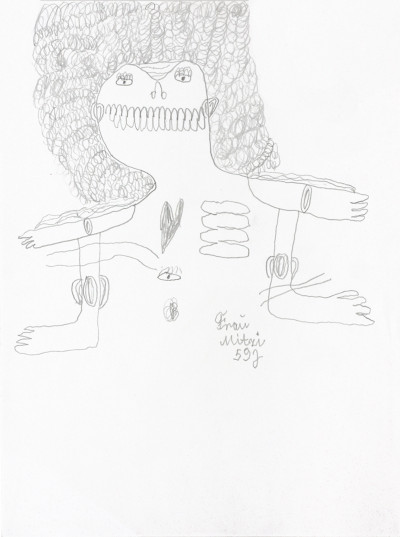
Schöpke’s drawings are striking for the brutality of their lines. Characters with disproportionate limbs, excessively expressive faces, devoid of makeup or artifice, confront the naked self. A disturbing encounter.
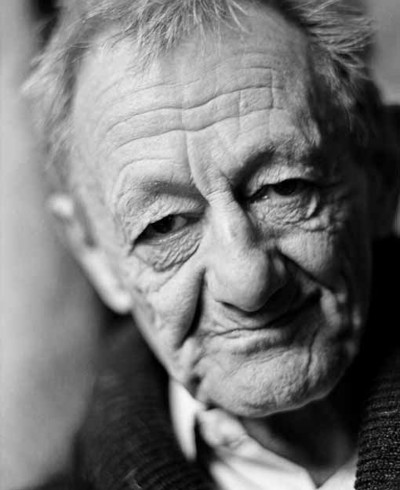
Born in Lower Austria in 1921, he attended school for four years, and was forced to leave after repeatedly failing to pass into higher grade levels. As a young man he worked as a manual labourer until 1941, when he was drafted into the German army. Here too, his stay was short: after a few weeks, he was dismissed because, according to the military doctor, he was “not even able to tie his shoes”. Declared unfit, he was immediately discharged, and after a brief period in a psychiatric clinic, Schöpke worked in a smeltery and later, on building sites. His mental problems only increased, with his state of mind swinging from a condition of great agitation to deep depression. He became a permanent resident of the Klosterneuburg psychiatric hospital near Vienna at the age of thirty-five and moved into the Haus der Künstler, an arts workshop linked to the hospital in 1956.
He would draw during periods of hyperactivity and then stop completely for several weeks. Schöpke worked with graphite and chalk, applying overlapping layers of colour with great energy, but only using a limited number of tones, ranging from brown to ochre and grey. His compositions portray dismembered human figures and transparent bodies with visible interior organs. These figures always have an outsized head and abundant hair. Léo Navratil explains that Schöpke “in no way intends to shock with his drawings, […] on the contrary, he intends to create something very beautiful,” and indeed, the raw, pure beauty is present. Several articles are devoted to this major work, which now features in important collections of art brut.
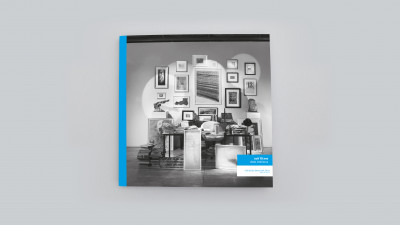
Preface : Stéphane Corréard
Foreword : Christian Berst
Catalog published to mark the exhibition preTENse, from September 12th to October 10th, 2015.