Zebedee Armstrong

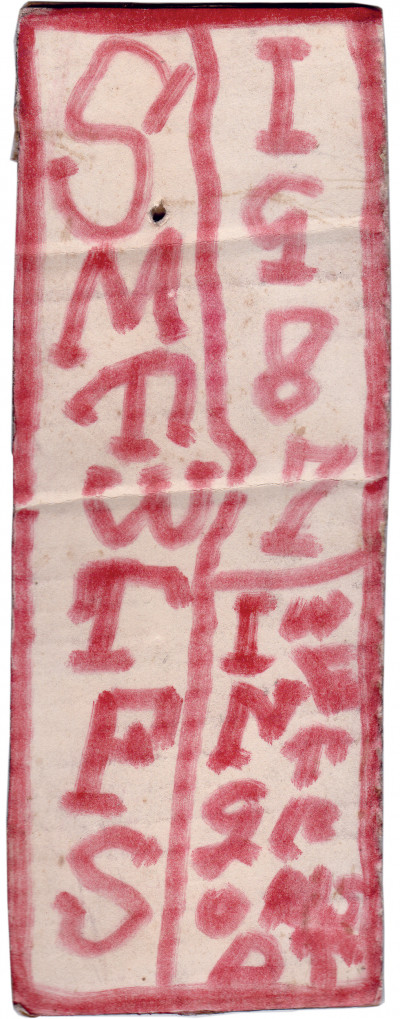
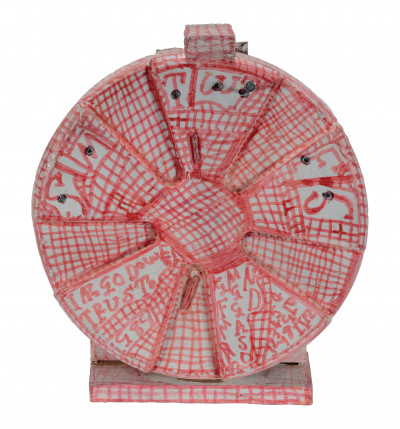
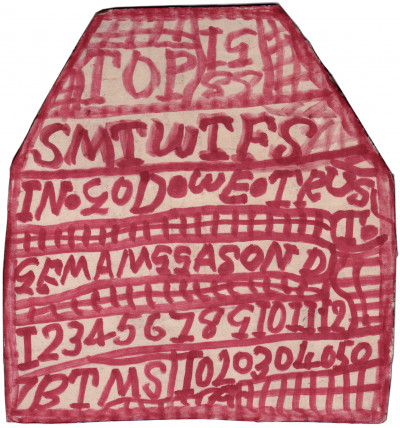
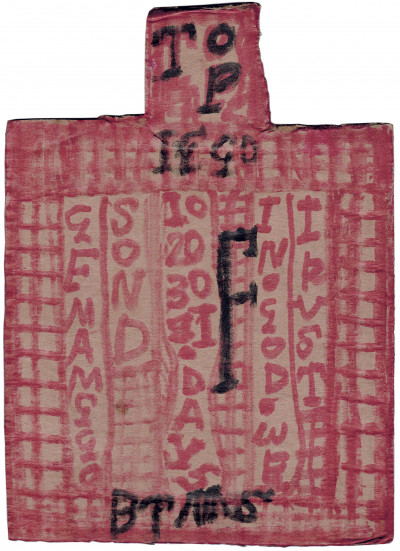
Zebedee Armstrong never left Thomson, Georgia. In 1972, an angel came to him there and announced the end of the world. From then on he set out to calculate its hour: nearly 1,500 wooden box calendars, gridded in black, red and blue felt-tip, crowded with dates and scripture verses, which he called “taping with time.” Time, for him, is not endured: it is built. Each piece seems to wrest the date of Judgement from Scripture, and holds up a mirror to our own reckoning.
His work is held in the collections of the Birmingham Museum of Art and the American Folk Art Museum.
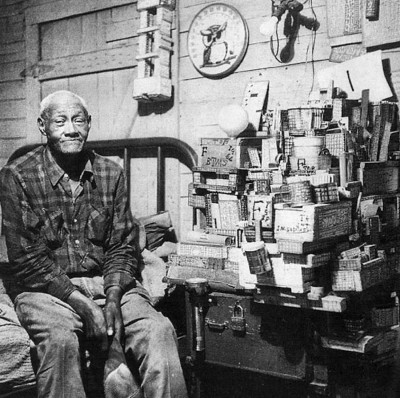
Armstrong was born in Thomson, Georgia. He went to school until he dropped out in eighth grade. He married in 1929 and had two daughters. For much of his life, he worked picking cotton on the local McCormick farm. After his wife died in 1969, he began to work at the Thomson Box Factory, staying there until 1982.
In 1972, he claimed to be visited by an angel who warned him that the end of the world was coming soon. Armstrong went on to construct almost 1,500 box calendars with the aim of trying to determine the exact date of the approaching doomsday. Many of the calendars are made of wood with clocks and dials, painted white and over-layered with grids or with text denoting the box’s purpose.


Prefaces : Phillip M. Jones & Lilly Lampe
Foreword : Christian Berst
Catalog published to mark the exhibition Do the Write Thing : Read Between the Lines at christian berst art brut, New York, du october 30th to december 21st, 2014.


