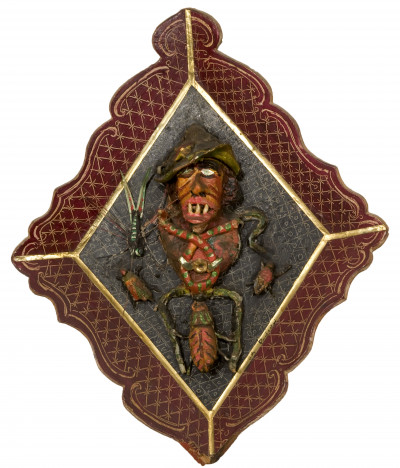
Giovanni Battista Podesta
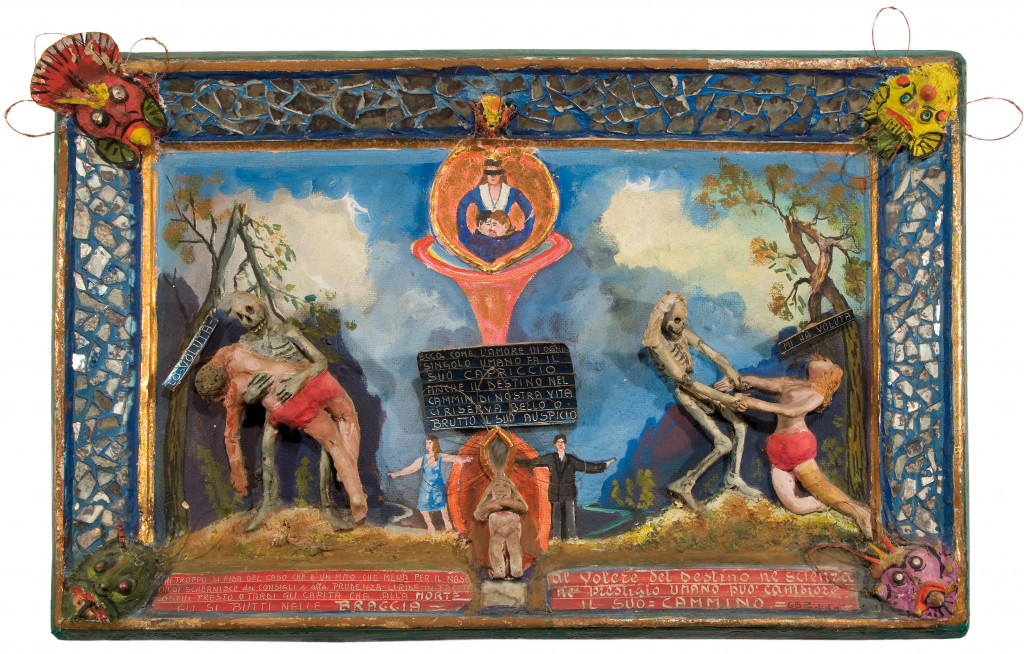
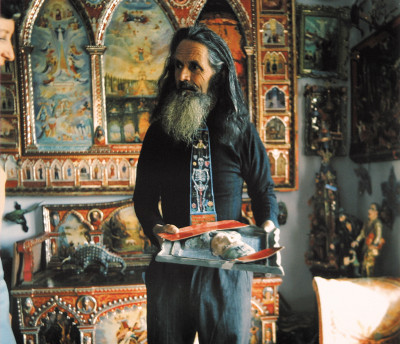
The man and his creation are as atypical as they are inseparable: while Podesta decorates his apartment, readily crafting furniture and objects in ways as improbable as they are admirable, he also uses himself as an object of creation, adorning himself with costumes and accessories of his own making, and parading through the city. Through this production, a form of “self-cultivation,” “Podesta attacked what the most avant-garde and subversive artists of his time had nevertheless always respected: the apparatus of fine art.” (Lucienne Peiry)
Giovanni Battista Podesta, born in 1895 in Torre Pallavicina (northern Italy), is the only son of a peasant family of thirteen children. The father having died young, Giovanni’s environment is exclusively female. Their financial condition forced him to leave school at the age of ten, to the benefit of a job as a bricklayer’s assistant. Called to war, he is met at his return with reintegration difficulties and must resign himself to enroll for three years at the carabinieri. He is then sent to Laveno, a small village on the shores of Lake Maggiore, where he meets his future wife whom he married after quitting his job to work in a ceramics factory. The couple has two children. Joint, Giovanni began his creative activity. He devoted himself first to painting in oil, focusing on religious subjects and landscapes, and he seeks to transform his apartment. Finally, he made sculptures and bas-reliefs, and makes himself special clothes with which he parades in Laveno. When his wife died in 1974, severely disrupted, he stops all types of creation and follows her two years later.
Giovanni Battista Podesta’s work, with its warm and vibrant colors and boundless creativity, is exhibited in several major collections of Art Brut. While Raw Vision features an article on him, the Compagnie de l’Art Brut devotes its entirety of issue no. 15 of Fascicles de l’Art Brut.