in abstracto
#4
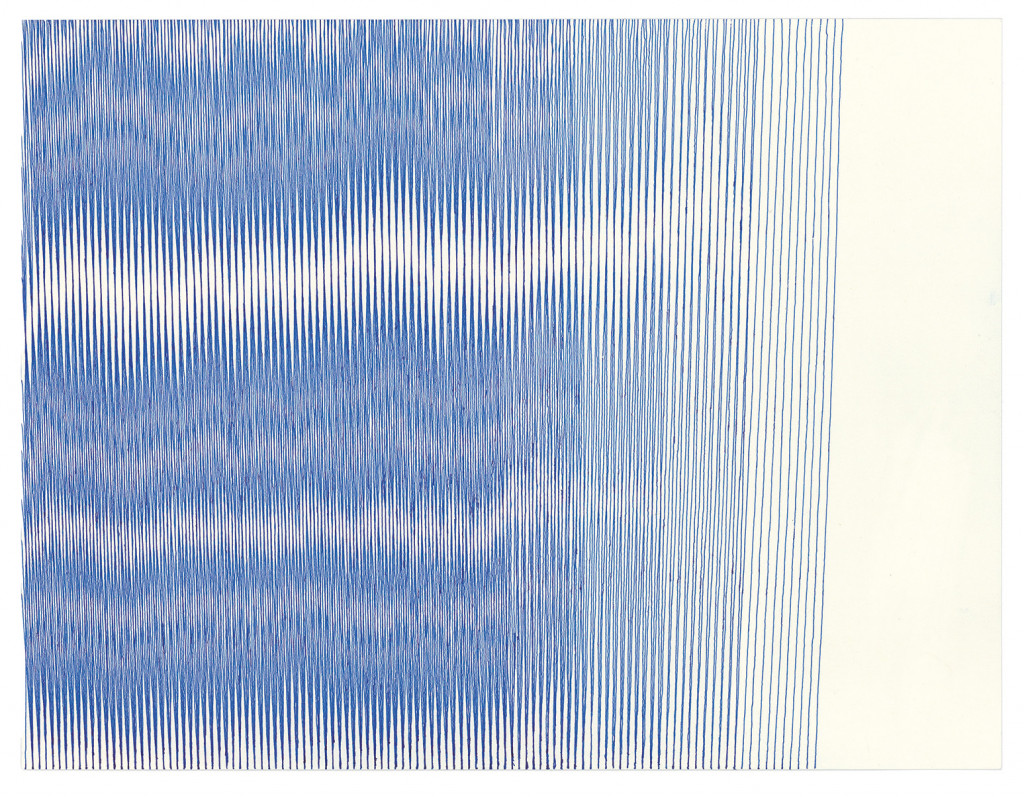
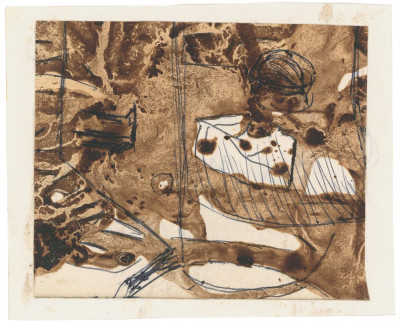
In Art Brut, abstraction never speaks with a single voice. At times it reveals an invisible order, at others it accompanies organic growth, and at others still, it condenses the world down to the sign.
Furthermore, as Jeanette Zwingenberger highlights, “The mystery of the works lies in their autonomous logics. These constitute an autopoietic system: produced according to the conditions of its own intelligibility, the work establishes a world whose laws emerge from its internal organization rather than from an external reference.”
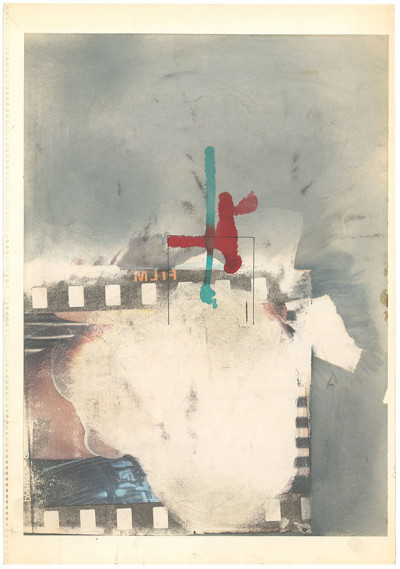
The compositions of Julius Bockelt, Aníbal Brizuela, Albert Moser, Bjarni H. Thorarinsson, or the anonymous late-19th-century French artist are less about geometry than they are about giving form to a latent order. More abundant, the graphic writing of Alexandro Garcia deploys a cosmic mechanic whose ramifications extend these compositions ad libitum. In contrast to this architectonic precision, the modulations of Joseph Lambert allow strata to settle slowly, while Jan Bratr’s iridescent droplets pace the surface like so many elementary units.
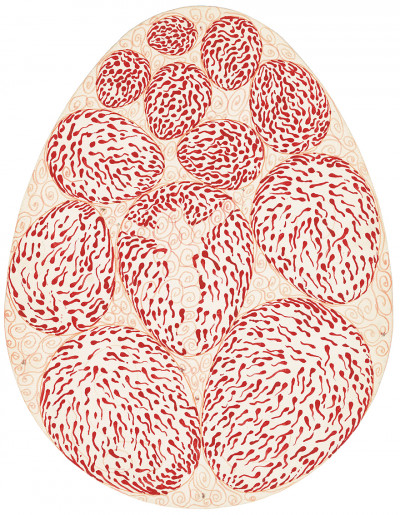
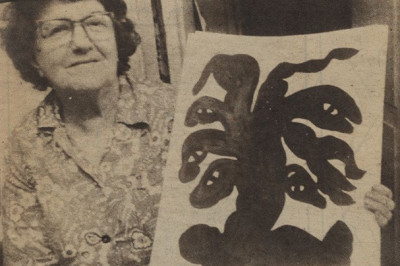
Elsewhere, the visible is discovered rather than constructed. The entities of Isabel Alemán Corrales stand at the threshold of figuration, while the whorled prayers of Jill Gallieni or the ectoplasmic interlacing of Raphaël Lonné seem to grow on their own, bringing countless presences to light without ever fully fixing them. This same surge courses through the plant-like emanations of Marcello Cammi, the lyrical fields of Beverly Baker, or even the “eggs” of Henri Ughetto, upon which the motif repeats, divides, and proliferates according to an almost cellular logic.
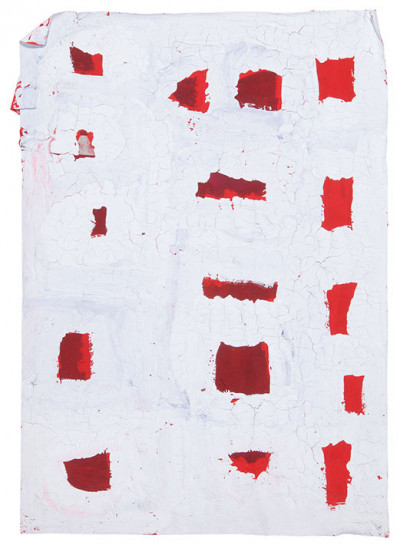
Further still, abstraction becomes concentration. Franco Bellucci’s assemblages of poor materials exhale a primal energy, while a few outcroppings of graphite are enough for Michel Nedjar to summon animality. With Leopold Strobl, it is obliteration that makes things tangible. Finally, Jacqueline B. and Ramón Losa entrust vacant spaces with a function just as essential as the signs that constellate them—the former through the resolute collision of colored islands, the latter by maintaining his field of apparitions in a skillful equilibrium.
So many works that do not describe a world but open one, aligning with Henri Maldiney’s intuition that a work of art “is that reality we were not expecting.”
With the artists: Isabel Alemán Corrales, an anonymous French artist (late 19th century), Jacqueline B., Beverly Baker, Jan Bratr, Franco Bellucci, Julius Bockelt, Giovanni Bosco, Anibal Brizuela, Marcello Cammi, Alexandro Garcia, Jill Gallieni, Joseph Lambert, Raphael Lonné, Ramon Losa, Albert Moser, Michel Nedjar, Leopold Strobl, Bjarni H. Thorarinsson, Henri Ughetto…


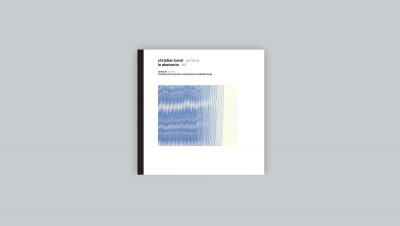
Published on the occasion of the exhibition
in abstracto #4
July 4–25, 2026
To purchase the catalogue: click